



With increased metabolism, too much metabolic hormone is produced in the “thyroid gland”. The “thyroid gland” is located on the front of the neck. Sometimes it will be enlarged or sore if you have an increased metabolism. An enlarged thyroid gland is also called “Struma”. Increased metabolism can cause atrial fibrillation.
An overactive thyroid can increase the strain on the heart and the risk of other heart problems. If you develop new or worsening palpitations, a rapid heart rate or feel “internally restless”, it may therefore be relevant to have your thyroid function checked.
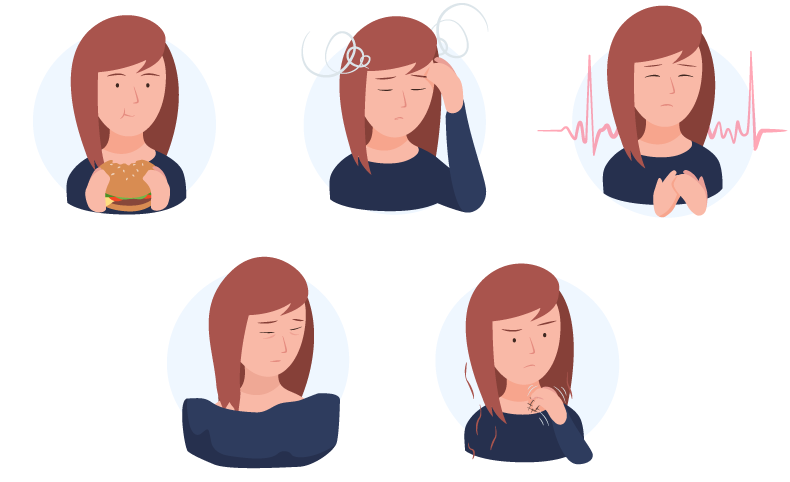
Symptoms of increased metabolism
- Increased appetite
- Difficulty concentrating and dizziness
- Extra beats and atrial fibrillation
- Difficulty sleeping
- Itchy skin and hair loss
- Weight loss
- Sweating
- Feeling of stress in the body
- loose stool / diarrhea
One can measure the metabolism with a blood test. If the metabolism is elevated, one will proceed with various studies to determine the cause. Elevated metabolism can be treated with medication. Sometimes one chooses to treat the thyroid gland with a radioactive substance and in rare cases one will treat it surgically.
Testing and treatment of an overactive thyroid
One can measure the metabolism with a blood test. If the metabolism is elevated, one will proceed with various studies to determine the cause. An elevated metabolism can, among other things, be caused by Graves’ disease, nodules in the thyroid gland or inflammation of the thyroid gland. Certain types of medication can also affect thyroid function. This includes amiodarone, which is used to treat some heart rhythm disorders.
Elevated metabolism can be treated with medication. Sometimes the thyroid gland is treated with a radioactive substance, and in rare cases surgery may be needed.
It is important to have an elevated metabolism treated and to take medication as prescribed. When thyroid function becomes stable, the strain on the heart is reduced. After treatment, some people may develop an underactive thyroid and need treatment with thyroid hormone.
For people with atrial fibrillation, it is therefore important to be aware that an elevated metabolism / overactive thyroid can be a contributing cause of palpitations and atrial fibrillation.
You can read more about other risk factors for getting atrial fibrillation here.


Leave a Reply